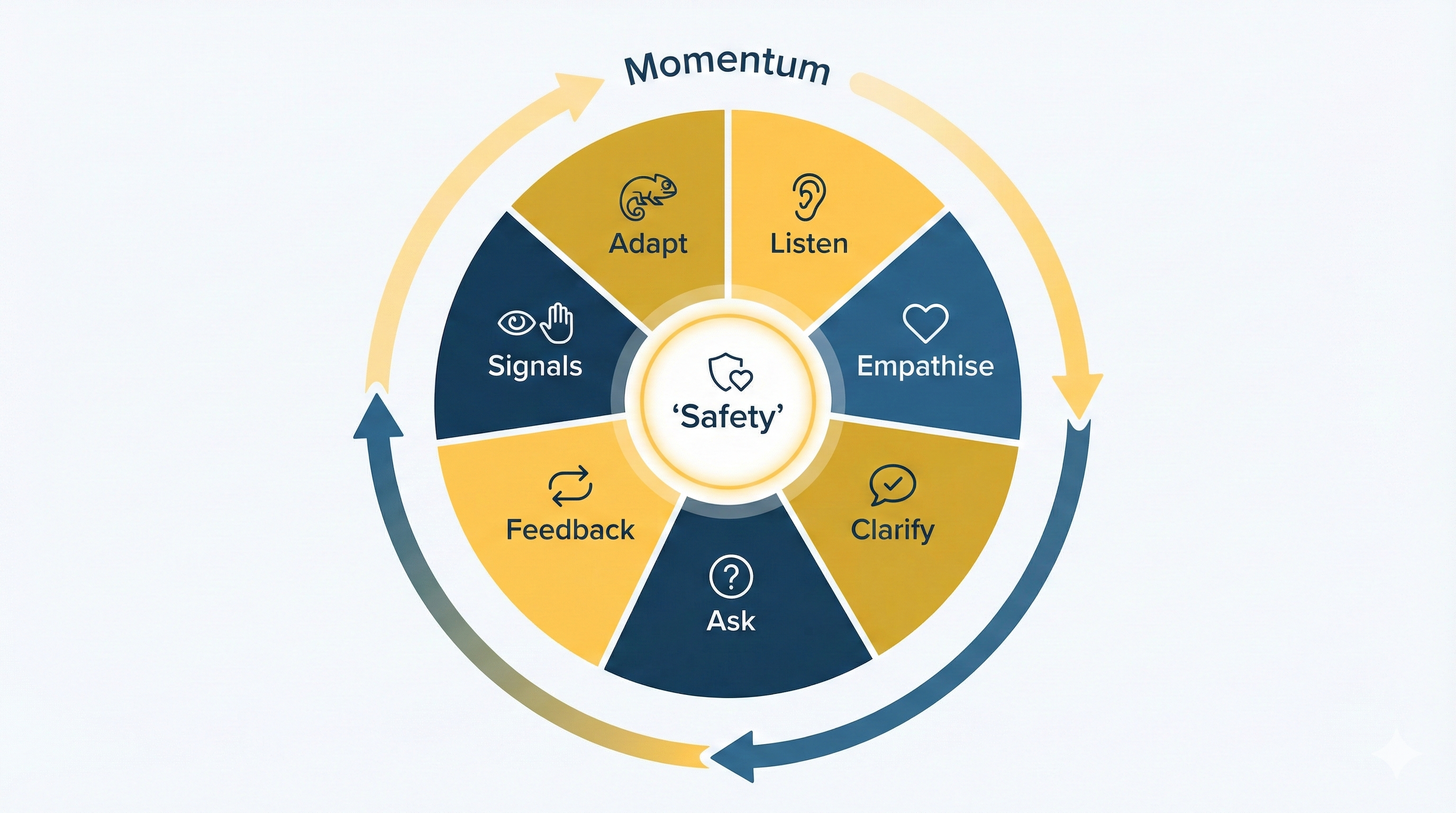
Why communication skills matter for founder and leader development
If you're a founder or leader working with a specialist business mentor or coach, you know that the quality of your relationship determines the quality of your outcomes. The best mentoring relationships aren't just about advice, they're about creating a space where you can think clearly, make better decisions, and develop the personal effectiveness that drives business momentum.
At the heart of this lies communication. Whether you're neurodivergent or neurotypical, whether you process information quickly or need time to reflect, whether you communicate best through structured dialogue or open exploration, effective communication skills enable your mentor to adapt their approach to how you actually think and work.
This article explores the communication skills that create effective coaching and mentoring relationships, with particular attention to how these skills support founders and leaders who need a thinking partner, someone who helps you operate and lead in ways that fit your wiring, not someone else's template. If you're evaluating potential mentors, communication skills are one of the key areas to assess, you can learn more about how to choose the right coach or mentor and what to look for.
Prefer to work through this with a thinking partner rather than on your own? Our accredited business mentoring and coaching for UK founders focuses on exactly these communication skills, with space to think, decide, and build a healthier business at a sustainable pace.
Active listening is fundamental to effective mentoring and coaching. For founders and leaders, this means your mentor pays close attention to what you're actually trying to articulate, not what they think you should be saying, or what their framework suggests you need.
This is especially important for neurodivergent founders, who may process information differently or communicate in ways that don't fit conventional patterns. Active listening involves hearing what's said, what's implied, and what's not said, without imposing views or value judgments. When communication barriers arise in mentoring relationships, they can undermine the entire engagement, strategies for effective mentoring include recognising and addressing these barriers early.
Effective active listening also involves summarising what you've said in your own language, providing a mirror of your thoughts so you can examine them in a fresh light. This isn't about the mentor showing they understand, it's about helping you see your own thinking more clearly.
Follow-up questions become an extension of active listening, probing deeper or providing a shift of perspective. Genuine curiosity means following the path of your thoughts to their logical ends, not steering you toward a predetermined conclusion.
Empathy
Empathy in mentoring and coaching isn't about sympathy or agreement, it's about understanding and connecting with your experience without judgment. For founders facing decision fatigue, leadership strain, or the overwhelm that comes with scaling a business, this creates the psychological safety needed for honest reflection.
As Nancy Kline notes, "Empathy is about being present in the moment with the person you are coaching or mentoring, listening deeply to what they are saying and to what they are not saying" (Nancy Kline, "Time to Think", 113). This means paying attention to both verbal and nonverbal cues to understand the full picture of what you're communicating.
For neurodivergent founders, empathy also means recognising that your experience of leadership, decision-making, and communication may differ from neurotypical patterns, and that's not a deficit to fix, but a difference to work with. An empathetic mentor helps you build systems and approaches that fit your wiring, not force you into someone else's model.
Clarity
Clarity in communication means distilling complex issues to their essence without losing nuance. For founders dealing with strategic decisions, team dynamics, and growth challenges, clarity helps cut through the noise and focus on what actually matters. The same principles of clear communication that make mentoring effective also apply to how you communicate your business value, which you can assess using diagnostic tools like the Distinctive Brand Index.
Effective mentors and coaches select language that is direct, objective, and free of misinterpretation. They avoid jargon or technical language that creates distance, and they pitch communication to your level based on what they understand about how you think and process information.
As Kline notes, "Clarity is about being able to describe what you are thinking or feeling accurately" (Kline, "Time to Think", 113). This helps ensure you understand the conversation's key points and the actions you need to take to achieve your goals, whether those are about personal effectiveness, leadership development, or creating healthier momentum in your business.
Questioning Skills
Effective questioning is often considered the bedrock of coaching and mentoring, but there's a danger in becoming too focused on asking the "right" questions rather than truly paying attention to you as the client.
As Marcia Reynolds notes, coaches can end up spending more time trying to remember their question script than actually engaging with the client. This is particularly problematic for founders who need a thinking partner, not a question-generating machine.
Instead, effective questioning involves the ability to reframe comments and observations into open questions that allow you to continue thinking and talking aloud. The purpose isn't to steer you to a conclusion the mentor has in mind, but to provide opportunities for you to examine your thoughts and develop your own insights.
This requires the mentor to be aware of their own values, biases, and judgments, and to adjust them before posing questions. For neurodivergent founders, this might mean avoiding questions that assume linear thinking or conventional problem-solving approaches, and instead creating space for different cognitive patterns to emerge.
Feedback
Clear and constructive feedback is critical in mentoring and coaching relationships. For founders, this means receiving honest input about leadership behaviours, decision-making patterns, or communication approaches that might be limiting effectiveness, without it feeling like an attack.
Effective feedback is specific and fact-based, focusing on observable behaviours rather than character judgments. It maintains boundaries while addressing patterns that might be harmful to your leadership effectiveness or business momentum.
Remaining calm and objective while being direct about issues is crucial. Sometimes, framing feedback with positive observations before and after can help, but this shouldn't be used if it means you're likely to ignore the feedback itself.
For founders working on personal and leadership effectiveness, feedback needs to connect to outcomes: how does this behaviour or pattern affect your ability to lead, decide, and create momentum? How does it impact your team dynamics or business results? Understanding these outcomes is part of recognising the broader benefits of mentoring for both personal development and business growth. You can see how effective communication and feedback create real results in our case studies, where founders have transformed their leadership effectiveness through structured mentoring relationships.
Founders we work best with
These communication skills are not abstract for us, they sit at the heart of the mentoring and coaching work we do with founders. We work best with people who:
Are carrying most of the decision making weight in a business that is already moving
Need a calm thinking partner rather than more noise or generic advice
Are neurodivergent or neurotypical founders who want support that fits their wiring
Are ready to change how they lead, not just what is on their to do list
Chris also does dedicated 1:1 coaching and mentoring work outside of Polything, through Talintyre, including coaching built specifically for ADHD founders. If your priority is marketing strategy delivered alongside that thinking-partner support, Polything's mentoring and coaching plans below are still the place to start.
If that sounds like you, and you recognise yourself in the scenarios described here, you can see how this looks in practice in our business mentoring and coaching plans, from short, focused engagements through to longer term support.
Nonverbal Skills
While Albert Mehrabian's 1967 study of 37 female participants has been misapplied to suggest that only 7% of communication is verbal (this thinking has been challenged by Timothy Hegstrom (1979) and Ray Birdwistell, who himself was criticised for his research), nonverbal communication remains important for effective mentoring relationships.
Mehrabian himself published an update stating that "this and other equations regarding the relative importance of verbal and nonverbal messages were derived from experiments dealing with communications of feelings and attitudes (i.e., like-dislike). Unless a communicator is talking about their feelings or attitudes, these equations are not applicable" (Mehrabian 1981).
However, whatever the exact percentage, nonverbal communication, gesturing, body language, tone of voice, and facial expressions, plays a role in building trust and understanding. This is critical when we consider that "our brains operate with a negativity bias, that causes us to register even innocent expressions more readily than neutral or positive" (Marcia Reynolds, "Coach the Person" 178).
For mentors and coaches, this means being aware of what we communicate nonverbally. As Reynolds notes, "Mastery in coaching requires that you accept that you are a judgy, biassed person. To judge is human." We must "catch and release" these judgy non-verbal reactions before they "sabotage your coaching" (Reynolds 179). This is easier said than done, but we can always strive to be a "nonreactive thinking partner" (Reynolds 182).
For neurodivergent founders, nonverbal communication can be particularly complex. Some may have different patterns of eye contact, body language, or facial expression that don't match neurotypical expectations. An effective mentor recognises this and doesn't misinterpret these differences as disengagement or lack of interest. The organisational context for mentoring success also plays a role, communication within the organisation needs to support open dialogue for mentoring to be effective.
Adaptability
Adaptability lies at the core of great communication in mentoring and coaching. The ability and continued curiosity to try different styles of communication for your benefit, not the mentor's convenience, is what separates effective relationships from formulaic ones.
As people learn and process information very differently, founders respond and engage differently with different forms of communication. Sometimes preferences can be determined by personality or formal assessments (such as Insights Colours or personality questionnaires), but often they emerge through the relationship itself.
For neurodivergent founders, adaptability is especially important. You might need:
More time to process questions before responding
Written summaries or follow-ups instead of (or in addition to) verbal discussions
Structured frameworks versus open exploration, or vice versa
Different communication channels (email, video, in-person) depending on the topic or your energy levels
Recognition that your communication style may vary day-to-day based on sensory or cognitive load
Whichever method is used, tailoring to your needs should be the priority. A practitioner might need to use different communication techniques to help an introverted or shy founder open up, or they may need to be more direct and authoritative with a founder who is resistant to change. These techniques develop and evolve as the engagement progresses, as you gain insight and start improving your outcomes.
What founders say about mentoring and communication
★★★★★ 5/5
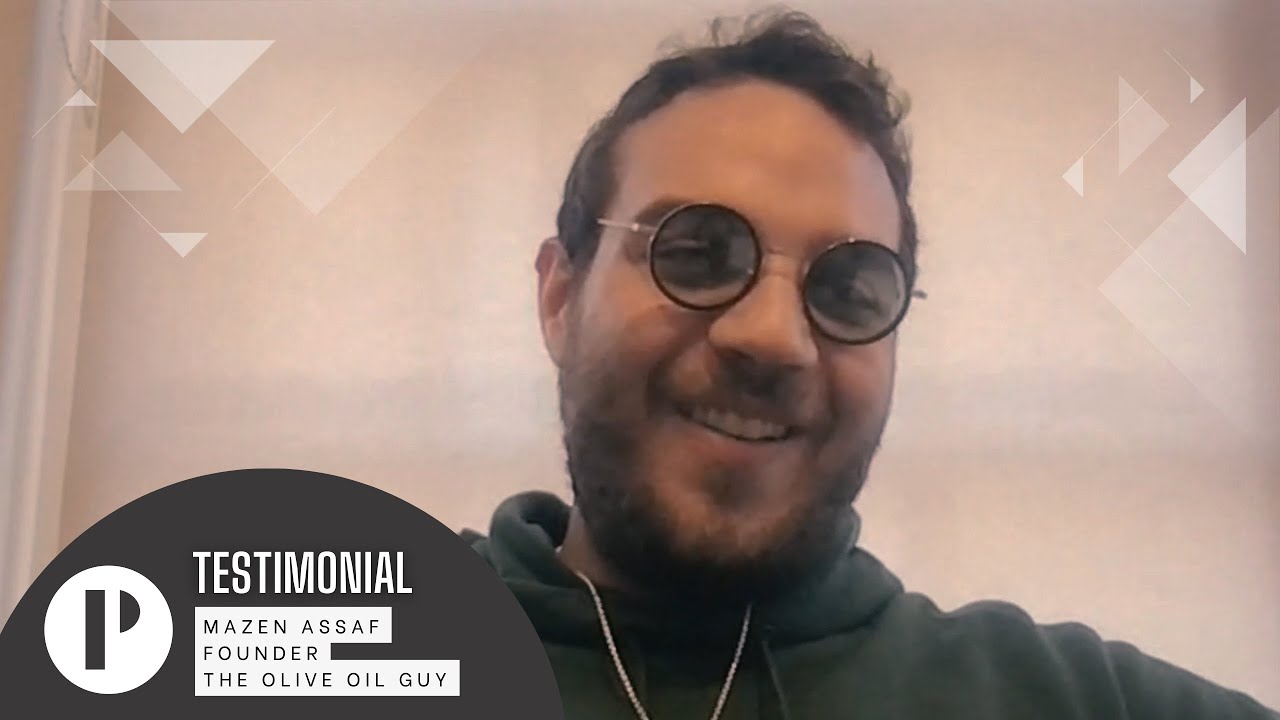
"I had the pleasure of having multiple mentoring sessions with Chris, and his guidance was pivotal in refining my start up idea, identifying our target persona, and establishing a clear customer value proposition. Anyone looking to grow their business would greatly benefit from his mentorship and expertise. Highly recommended."
Mentoring Testimonial - Mazen - Founder - The Olive Oil Guy
Mazen shares how Polything mentoring helped him grow his olive oil business with strategic guidance and support.
Mazen
Founder at The Olive Oil Guy
15 January 2024
★★★★★ 5/5
"The mentoring I have received as a small business entrepreneur has been invaluable. Chris has helped me to understand new opportunities, how to focus on bringing value to my customers and provided a huge amount of support in getting my business launched and off the ground. It has proven to me the huge value in mentoring that small businesses can benefit from."
Effective communication skills are essential for successful coaching and mentoring relationships that support founder and leader development. By developing these skills, mentors and coaches can create relationships that help you:
Think more clearly about your leadership and decision-making
Build systems and approaches that fit your wiring
Develop personal effectiveness that creates healthier business momentum
Navigate the challenges of scaling while maintaining your capacity and avoiding burnout
If this article resonates and you want structured support rather than more reading, our accredited polything mentoring and coaching offers clear plans, regular sessions, and a thinking partner who understands the realities of running a business.
P.S. - If this resonated but you're not ready to talk yet, the Polything newsletter has more like this. One email a week, founder-focused, no fluff. Subscribe here.